
The biggest change in corporate event entertainment going into 2027 is simple: the entertainment is no longer the thing you add at the end of the night, it is the experience itself. Briefs now ask for a journey designed moment by moment, acts that pull a room together in person, and performances built to be filmed and shared. Here are the trends shaping corporate event briefs right now, each with a real example.
What does “experiential” actually mean for entertainment in 2026?
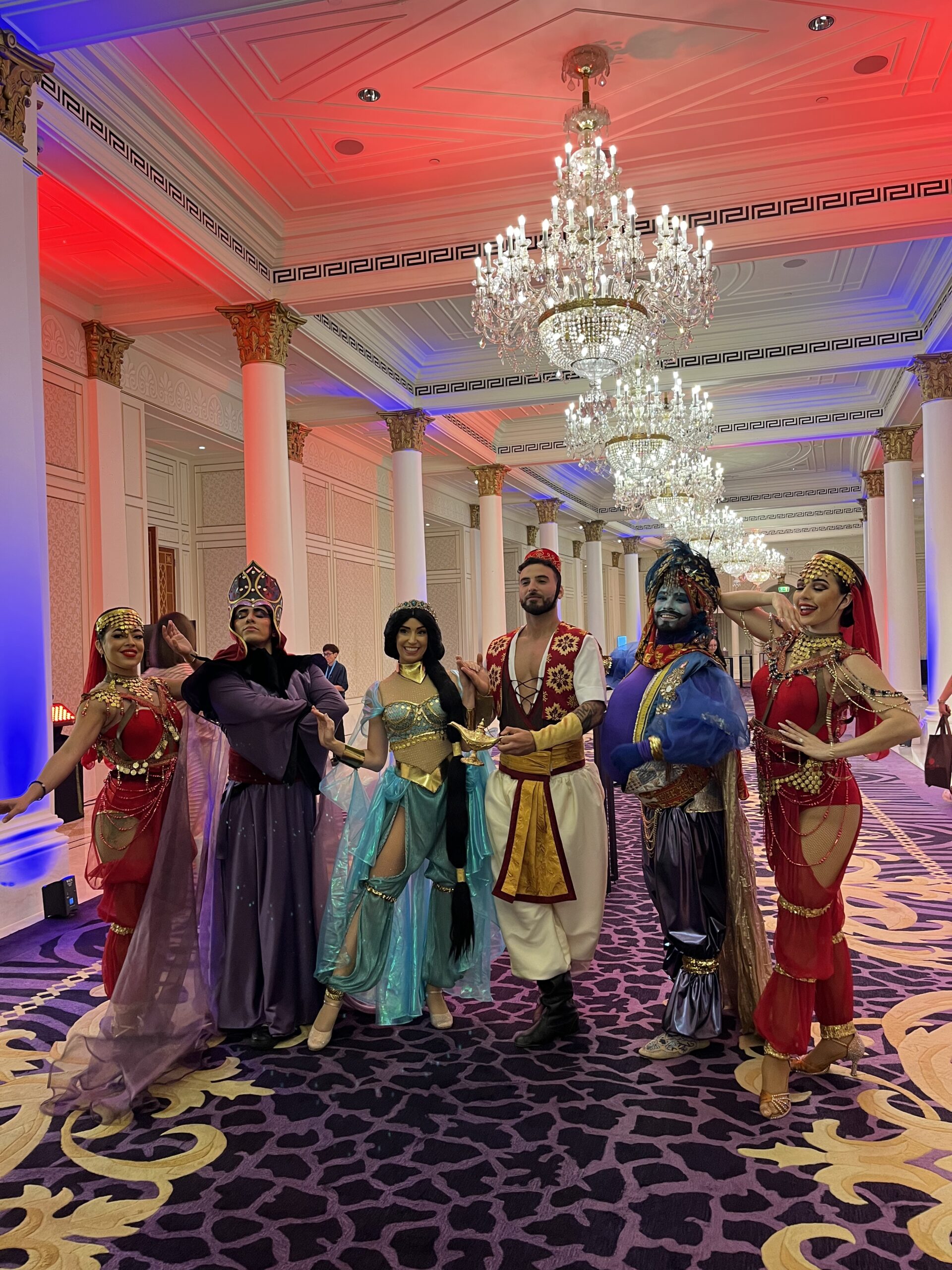
It means an event is designed as a curated journey, not a single decorated room. Arrival, dinner, the headline moment and the after party each become their own chapter, with a different energy and a different act. The industry language has shifted from “decorative backdrops” to “immersive environments”, and that filters straight down to how entertainment is booked: not one band for four hours, but a sequence of moments that keep the room moving. A full cast themed stage show is the clearest example of this thinking, a single staged centrepiece the whole room watches together.
A themed gala stage show: the designed centrepiece of the night.
Is live entertainment winning the room back from screens?
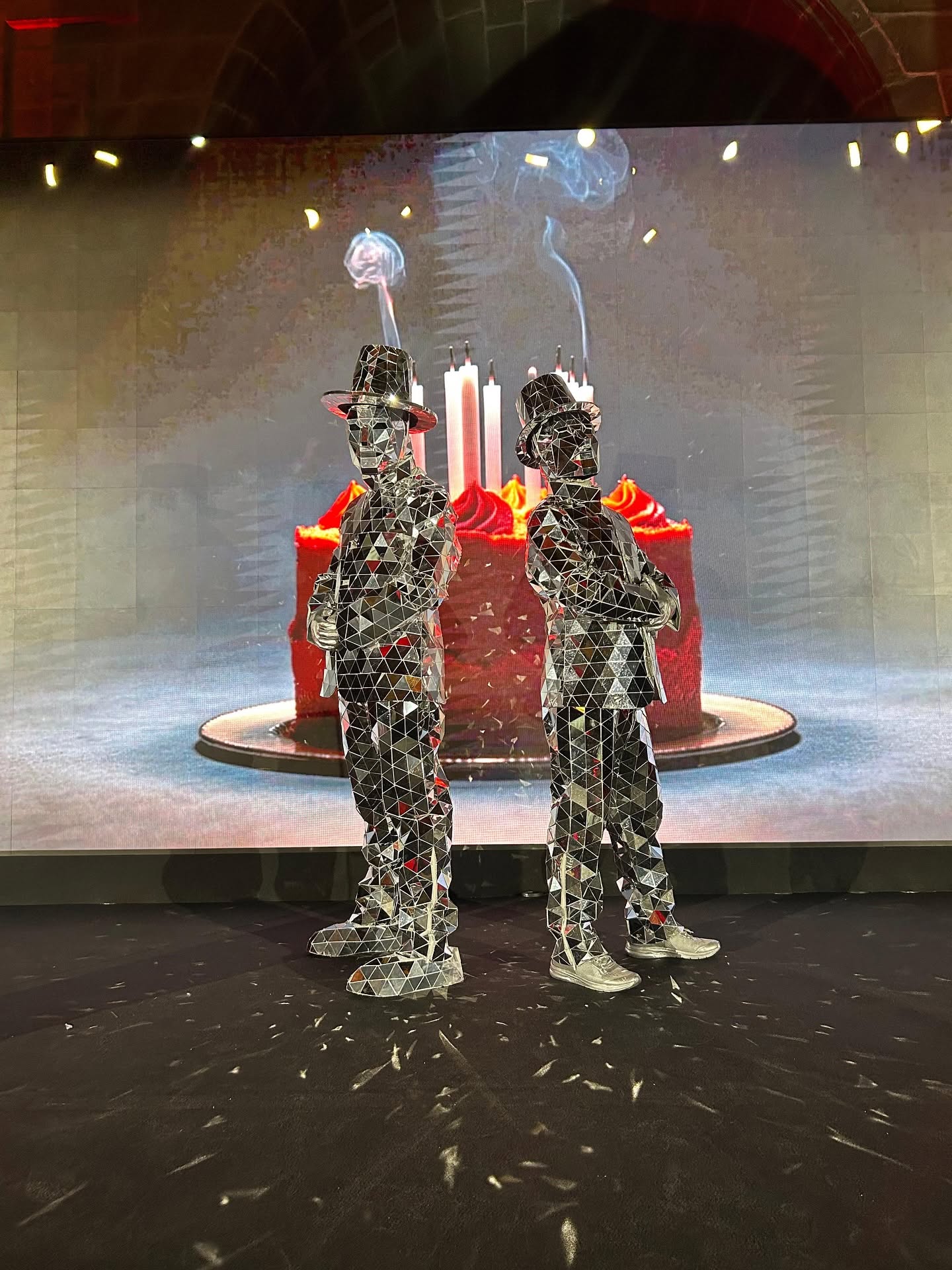
Yes, and it is one of the clearest signals of the year. After a long stretch of hybrid formats, LED walls and content on loop, planners are rediscovering that nothing resets a room like a live act that people did not see coming. A military marching band that walks in through the main doors, a line of mirror dancers that turns a reception into a photo wall: these are collective, in-the-room moments that a screen cannot reproduce. The screen supports the show now, it does not replace it.
How is technology changing live acts without replacing the performer?
The strongest tech trend is not AI on a screen, it is technology worn and performed by a human: programmable LED costumes, projection and light art, props that can carry a brand logo or a client message in real time. The effect is a live act with the scale of a production. A custom light show draws your story in light, and LED drummers turn a product reveal into a wall of sound and colour. The technology amplifies the performer, it does not stand in for them.
Why are brands designing entertainment to be shared?
Because the event is no longer the end of the story, it is the start of a content pipeline. A single well-designed act now feeds LinkedIn, Reels, Shorts and TikTok for weeks, so briefs increasingly ask: what is the moment people will film? That pushes two things. First, photo-first acts and installations, from mirror dancers on arrival to a temporary tattoo station guests queue for. Second, personalisation, because a logo on an LED costume or a welcome written for the brand turns a performance into a branded asset. The act has to work in the room and on the feed.
What does the latest data say about the 2026 year-end season?
The numbers point the same way as the trends. According to a 2026 UK industry report, the average corporate party now runs at 208 guests, up 19 percent on 2025, and the average high-value corporate booking is worth just over £21,000. Companies are spending more, on bigger, higher-impact events. They are also booking earlier: 42 percent of parties were booked before September, with Friday and Thursday the most contested nights. The practical takeaway for anyone planning a December event is blunt: the budgets are bigger and the best headline acts on peak dates go first, so secure them now rather than in November.
How CHRIO builds these trends into one event
These trends are not a menu of separate ideas, they work best stitched into one night. For a global corporate client in Dubai, CHRIO coordinated entertainment and logistics end to end so that a themed headline show, high-impact live acts and branded moments all landed on cue across a complex schedule. You can see how the pieces fit together in this Dubai case study, and browse every act in the full entertainment catalogue.
Frequently asked questions
What is the single biggest corporate event entertainment trend for 2026 and 2027?
Experience-led design. Entertainment is planned as a journey across the night rather than one act, with each moment built to engage the room and, increasingly, to be filmed and shared.
Do we need several acts or just one headliner?
Most events work best with three to four moments: a welcome act, something through dinner, one headline show, and the party. That keeps energy high all night without crowding the programme.
How early should we book entertainment for a December event?
Earlier than most people think. With 42 percent of 2026 parties booked before September, and headline acts on peak Fridays and Thursdays in high demand, four to eight weeks ahead is a sensible minimum and sought-after acts need longer.
How do we make entertainment work as social content?
Choose at least one photo-first moment (a striking welcome act, a light or LED show, an interactive station), brief a photographer or videographer to capture it, and personalise where you can with brand colours, logos on LED props or a bespoke welcome.
Which cities does CHRIO cover?
Entertainment is delivered regularly in London, Dubai, Barcelona, Madrid and Paris, and on request across 50+ countries.
Plan an event people will talk about
Tell us your date, city and the feeling you want in the room, and we will send a tailored entertainment concept within 24 hours. Talk to CHRIO about your event.